For more than 100 years, independent government agencies have regulated American monetary policy and stock trading, transportation systems and election campaigns, consumer product safety, and broadcast licensing, all free of direct political interference and oversight by the White House.
A major case before the Supreme Court on Monday could upend that tradition and dramatically transform the federal government, eliminating the spirit of bipartisanship and political continuity that Congress had sought to instill in key areas of American life when it created the agencies.
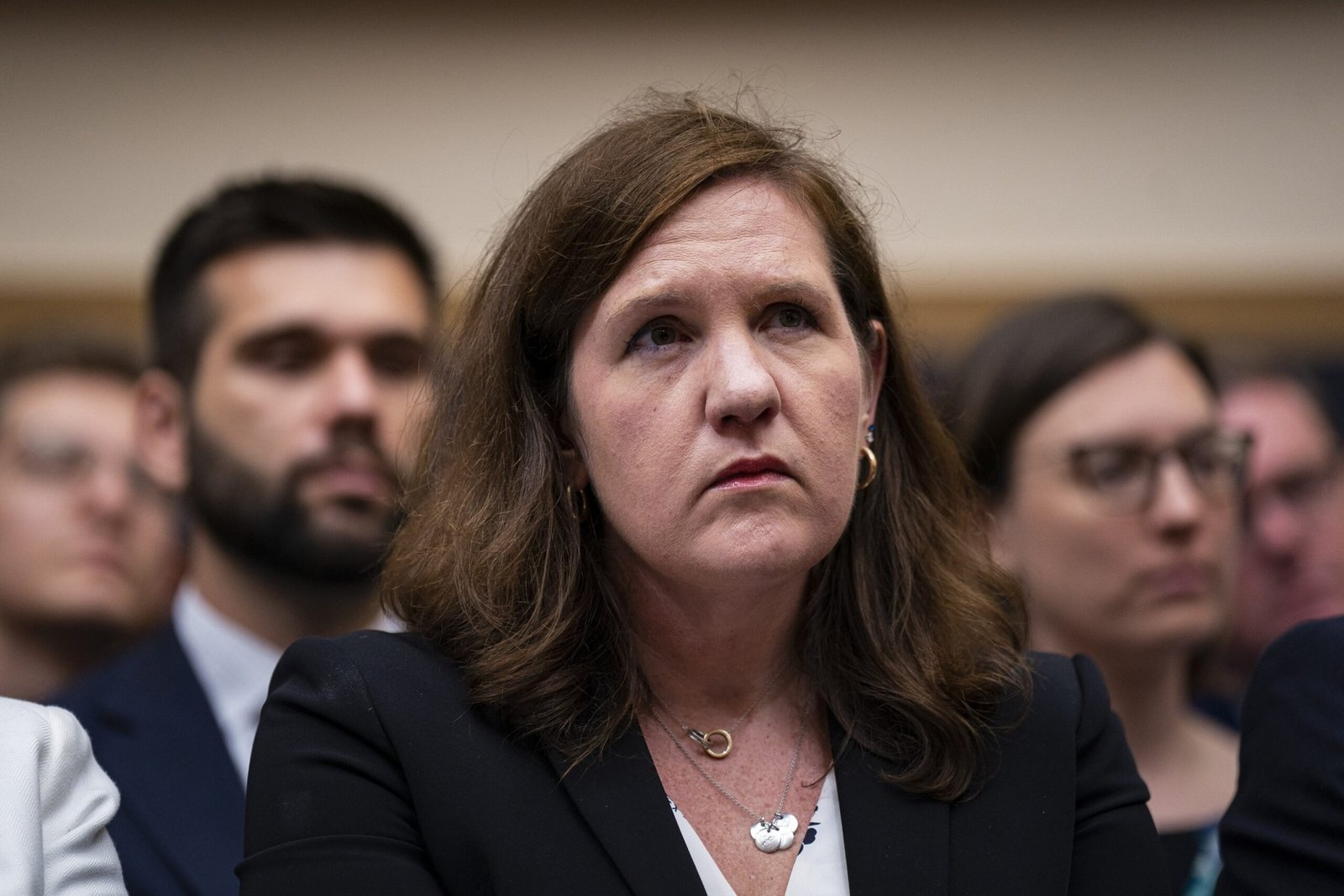
At stake is President Donald Trump’s attempt to remove Rebecca Slaughter, a Democrat, as a member of the Federal Trade Commission on the grounds that her service is “inconsistent with the administration’s priorities.” She was appointed to a seven-year term in 2023.

Federal Trade Commission (FTC) Commissioner Rebecca Slaughter during a House Judiciary Committee hearing in Washington, DC, on July 13, 2023.
Al Drago/Bloomberg via Getty Images
Lower courts have held that Slaughter’s firing was illegal since federal law stipulates that a president can only remove a commissioner for “inefficiency, dereliction of duty, or misconduct in office.” The protection from removal for cause was intended to insulate the FTC from politics.
Trump argues that the agreement is unconstitutional and that a president should have full control over the leadership of government bodies that set policies and enforce regulations.
If it prevails, presidents could gain unlimited power to fire members of independent agencies at will, which in turn could mark the end of their independence.
“Congress designed these agencies, like the FTC, like the [Federal Reserve]as [Securities and Exchange Commission]”Let the entire panoply of independent agencies have bipartisan voices so that there can be accountability and transparency,” Slaughter said in an interview with ABC News earlier this year.
About two dozen organizations, including the Federal Election Commission, the Federal Communications Commission and the National Transportation Safety Board, also consist of members appointed by presidents for a fixed term and protected by law from removal for purely political reasons.
Trump has also attempted to fire members of the National Labor Relations Board, the Merit Systems Protection Board, the Consumer Financial Protection Bureau and the Federal Reserve, all of which have challenged their removals in court.

A sign obscures the location of the Federal Trade Commission (FTC) headquarters building on August 20, 2025 in Washington, DC.
J. David Ake/Getty Images
The Constitution “grants all ‘executive power’ to the president and requires him to ‘take care that the laws be faithfully executed,'” Trump’s lawyers argue in their brief before the high court, citing Article II. They insist that the language inherently includes the power to remove “executive officers of the United States whom he has appointed.”
unanimously decision of 1935However, the Supreme Court upheld the design of independent agencies, concluding that their role as quasi-legislative and quasi-judicial bodies differentiates them from executive branch departments and does not subject them to the whims of the president.
Several members of the current Supreme Court have publicly indicated that they believe the ruling should be overturned or at least not applied to this case.
“I think we’re all hoping that the Court will give the president a lot more control over these so-called independent administrative agencies and restore some political accountability within the executive branch,” said Sarah Isgur, SCOTUSblog editor and ABC News legal contributor.
“We also have to hope that it forces Congress to stop delegating vast and vague powers to the executive branch and these agencies once they are under its direction,” he added.
The implications for the public could be significant, some legal experts say.
“It can influence how agencies conduct investigations, enforce regulations, and supervise markets, while introducing uncertainty into regulatory oversight that affects investment and long-term planning,” said Varu Chilakamarri, a former Justice Department attorney and appellate litigator at the K Law Firm.&L doors.
In other words, giving the president full control of the leadership of independent agencies will allow him to align the agencies’ actions with the administration’s agenda, strengthening the power of the executive branch while opening the door to significant policy changes after each presidential election.

Donald Trump makes an announcement in the Roosevelt Room of the White House in Washington, DC, on December 2, 2025.
Yuri Gripas/POOL/EPA/Shutterstock
The FTC currently has no Democratic members on the five-member panel after Trump fired Slaughter and fellow Democratic commissioner Alvaro Bedoya in March.
In September, the Supreme Court rejected Slaughter’s bid to remain on the commission while the litigation is pending. The 6-3 decision, with all three liberal justices dissenting, indicates that the likely outcome of their case will be in Trump’s favor, analysts said.
The Supreme Court’s decision will also determine the fate of Cathy Harris, a member of the Merit Systems Protection Board fired by Trump, and Gwynne Wilcox, a member of the National Labor Relations Board fired by Trump, who also challenge the president’s actions on identical grounds as Slaughter.
An independent agency that is not directly involved in the case: the Federal Reserve. While removal protections for members of the central bank’s board of governors are similar to those of the FTC and other agencies, the justices have made clear in their opinion that the bank is different.
“The Federal Reserve is a quasi-private entity with a unique structure that follows the distinct historical tradition of the First and Second Banks of the United States,” the Supreme Court wrote in an unsigned opinion in May.
Trump’s unprecedented attempt to remove Lisa Cook, a member of the Federal Reserve Board of Governors, will be reviewed by the Supreme Court in a separate case next month.
A decision in both cases is expected before the court’s term ends in June 2026.