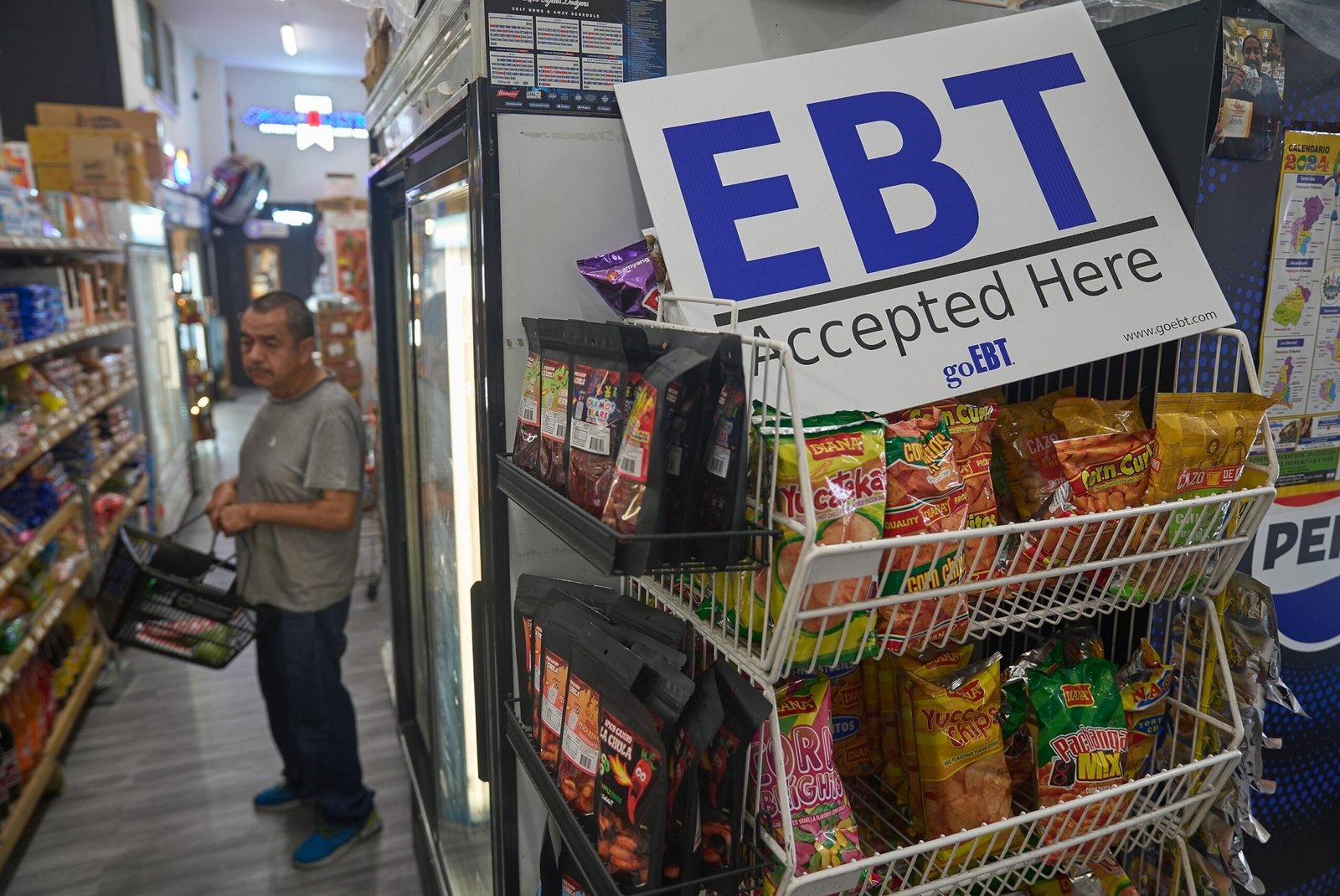
Just as SNAP benefits were restored for millions of Americans following the reopening of the federal government, many are now on the verge of losing them permanently.
Nearly 42 million Americans, including low-income families and vulnerable households, rely on SNAP, or the Supplemental Nutrition Assistance Program, to help pay for food or other basic household items.
The U.S. Department of Agriculture has been directing states to implement new guidelines as part of President Donald Trump’s mega bill signed into law in July, which will include new work requirements, narrowing eligibility for refugees and having states shoulder some of the cost of the program.
Congressional Budget Office Estimates (CBO) released in August suggest that, as a result of the changes, more than 3 million Americans could lose assistance in the coming years.
“I think millions of people are going to lose food… There’s no question that this is going to create more harm, suffering and hunger,” Joel Berg, executive director of the hunger relief nonprofit Hunger Free America, told ABC News.
New job requirements.
According to the megabill, the upper age limit for those who must meet job requirements was raised from 54 to 64 years for the first time for healthy adults without dependents
Additionally, exemptions for parents or other family members with responsibility for a dependent under the age of 18 were changed to under the age of 14.
According to CBO estimates, about 1.1 million people will lose SNAP benefits between 2025 and 2034, including 800,000 healthy adults up to age 64 who do not live with dependents and 300,000 parents or caregivers up to age 64 with children age 14 or older.
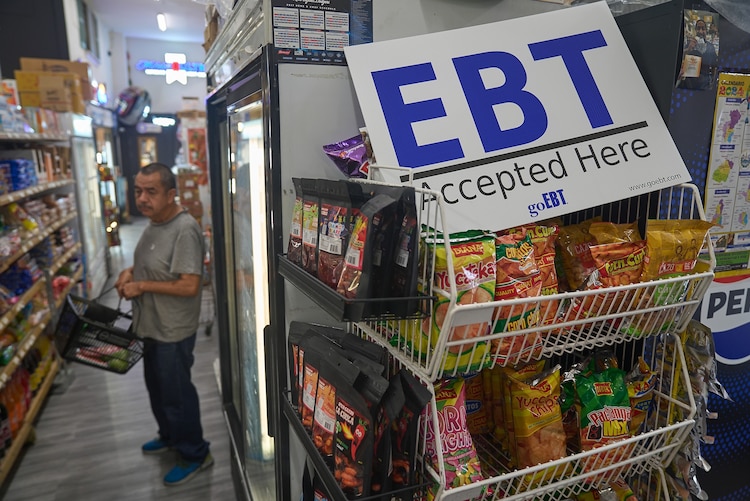
A banner reads, “EBT Accepted Here” at the El memoria market in Los Angeles on October 31, 2025.
Damián Dovarganes/AP
Exemptions for homeless people, veterans, and young adults who were in foster care when they turned 18 were also eliminated. Meanwhile, exemptions were added for American Indians.
The CBO estimates that eliminating these exemptions will result in a loss of benefits for 300,000 people in those groups.
Berg said these requirements will be disruptive because people may have to leave work to visit a government office that provides proof of work and potentially lose wages.
“It’s really about work reporting requirements, and we know that none of these requirements actually increase work,” Berg said. “You’re adding them for veterans, like they haven’t given enough to the country. You’re adding work requirements for parents of teenagers. You’re adding work reporting requirements for homeless people. I really don’t understand how homeless people are going to be able to get and keep jobs.”
Berg added that it is important to dispel the myth that all Americans who receive SNAP are not employed or participating in work programs.
Data of the 2023 American Community Survey shows that the majority of American families receiving SNAP benefits had at least one family member working in the past 12 months.
However, work requirements may reduce program participation. TO National Bureau of Economic Research 2021 Report found that SNAP work requirements could lead to up to 53% of eligible adults leaving the program within 18 months.
Restrictions for asylum seekers
Under the mega bill, refugees, asylum seekers and those granted legal protection on humanitarian grounds are You are no longer eligible for SNAP benefitseliminating decades of federal precedent.
This includes trafficking victims who were previously certified by the Department of Health and Human Services and Iraqi or Afghan special immigrant visa holders who worked with U.S. forces or agencies.
According to CBO estimates, about 90,000 people in these categories will become ineligible for SNAP benefits.
The only non-citizens who can still receive benefits are legal permanent residents, although they must wait five years after receiving their green card, with certain exceptions.
Additionally, Cuban or Haitian entrants on humanitarian parole, as well as persons in the US under the Compact of Free Association (a series of international agreements between the US and three Pacific island nations) are also eligible.
“This policy is both petty and counterproductive,” said Naomi Steinberg, HIAS vice president of U.S. policy and advocacy, in a statement. “Resettled refugees and asylees have been granted legal protection to live and work permanently in the United States. Denying families who are just beginning to get their feet on the ground in their new American communities is an unspeakable mistake, especially when denying them basic nutritional assistance undermines their ability to achieve self-sufficiency and stability as quickly as possible.”
States sharing costs
States will have to share the cost of SNAP benefits Under the mega bill, the federal government will bear the cost of the program.
Under the mega bill, states with SNAP payment error rates above 6% have to pay a 5% share (starting in 2028) up to a maximum of 15% of SNAP benefit costs.

A SNAP EBT information sign is displayed outside a convenience store in Baltimore, Nov. 10, 2025.
Stephanie Scarbrough/AP
The CBO estimates that some states will maintain their current benefits and eligibility, while others will modify them and some will abandon the program entirely. This will reduce or eliminate SNAP benefits for about 300,000 people between 2028 and 2034.
TO Commonwealth Fund Analysis found that about $128 billion in federal costs will be shifted to states, and many will not have the funds to meet the required matches. This could force states to opt out of SNAP for their residents.
“They are increasing administrative costs for states, which many states are going to use to reduce access,” Berg said. “That will cause states to raise taxes, cut something else, or cut back on food.”